I am a fourth generation Bengali to grow up in Bihar. I also went to a convent school. Such socio-cultural dynamics are not strange or unheard of in India. But they clearly contribute largely in raising a sufficiently confused young girl.

 Tomorrow is Saraswati Puja in India. Growing up, it meant an extra holiday in school. I do not remember myself doing any prayer ritual on this day; although something that lingers on from this day is the taste of Gotta Sheddho, literally translated from Bengali as “whole boiled”.
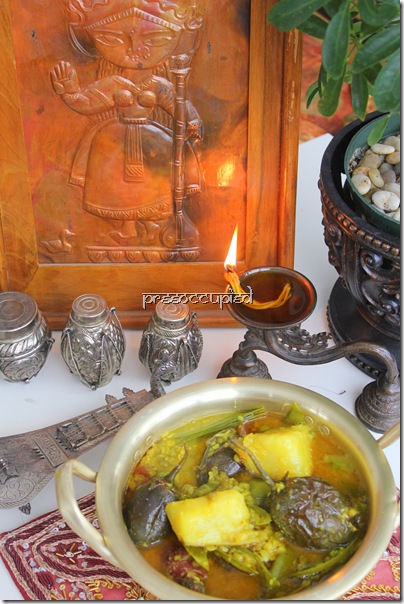
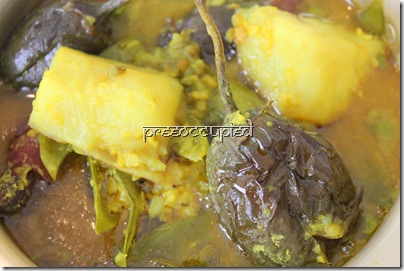 I am told, Gota Sheddho is a Ghoti thing, where Grandmothers and Mothers cook at least five types of whole vegetables with lentils on the day of Saraswati Puja, and eat it the next day, when its cooled down. The day of Sheetal Shasti.
 Saraswati Puja in the part of Bihar I lived in, meant young boys and men setting up pandals in the neighborhood and praying to the Goddess of Knowledge. It often translated into muted nuisance where the more boisterous boys would visit every home in the neighborhood to collect donations or chanda, which sadly was more forced than voluntary. These were also the boys who probably never went to school. So their association with “learning and knowledge” remained questionable.
 But I do not want to undermine the credibility of their efforts in making arrangements for just one day only (though “celebrations” often stretched to a week). Loud music - most often the raunchiest songs of that year made a perfect set up to tease and torment scared girls who ventured out on the streets that day. Another reason for me to stay in and prepare for the final exams coming up the next month. Though traditionally, its a pen and paper down day in India for all students.
But watching young girls and boys in their finest dresses made a great celebration from home. Some girls as young as 12 or 13 would wear saris.
 On this day, it is traditional to wear the color yellow (or mustard yellow) to welcome the Spring/Basant season in India. My memories of girls wearing yellow cotton saris, their hairs washed and smelling of Head & Shoulders, making a wet patch of damp at the back of their blouses where their hair ended are quite vivid. Each girl giggling, walking nervously in their little heels when they saw a group of boys coming their way. This day also made for a great desi, pre-Valentine’s Day celebration. All in the name of knowledge!
 With all the Saraswati Puja gung-ho around me, I would shift between bending over the cast iron railings of our terrace to people watch, run to the kitchen to see how Mum was making Gota Sheddho and sprint back to a very visible spot where people could see me “studying”. Clearly I was the only one who was not letting the Goddess of Knowledge down.
Now back to the taste of tradition – Gota Sheddho. There is no one recipe for this vegetarian stew, packed with hearty vegetables. Each family pretty much does it their own way. I will of course share how its made in my family. I had previously made Gota Sheddho on a regular day and the recipe is here.
Ingredients for Gota Sheddho are:


 Half cup whole urad dal
Half cup whole green moong
2 small sweet potatoes (either whole or cut into quarters)
Handful of whole green peas, remove the stringy part
Handful of broad beans/sheem, remove the stringy part
6-7 small eggplants
Few green chilies, slit
1 1/2 tablespoon ginger paste
1 teaspoon turmeric powder
2 tablespoon mustard oil
Sugar
Salt
Wash the two dals and begin to boil them in a pressure cooker or a thick bottom saucepan – for about 25-30 minutes.
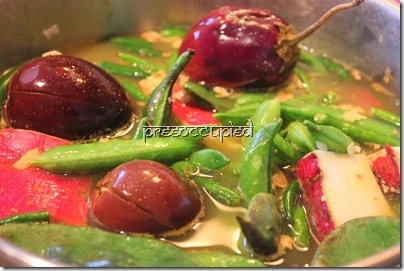 When the lentils get to a rolling boil, add vegetables, ginger, green chilies, turmeric powder, salt and sugar and pressure cook on medium-high heat for 10-15 minutes or until vegetables and dals are cooked. Just when you think all the vegetables and dals and well cooked but not too mushy, drizzle the mustard oil, remove from heat.
The Gota Sheddho is the right balance of sweet and savory, so do a test taste and adjust accordingly.